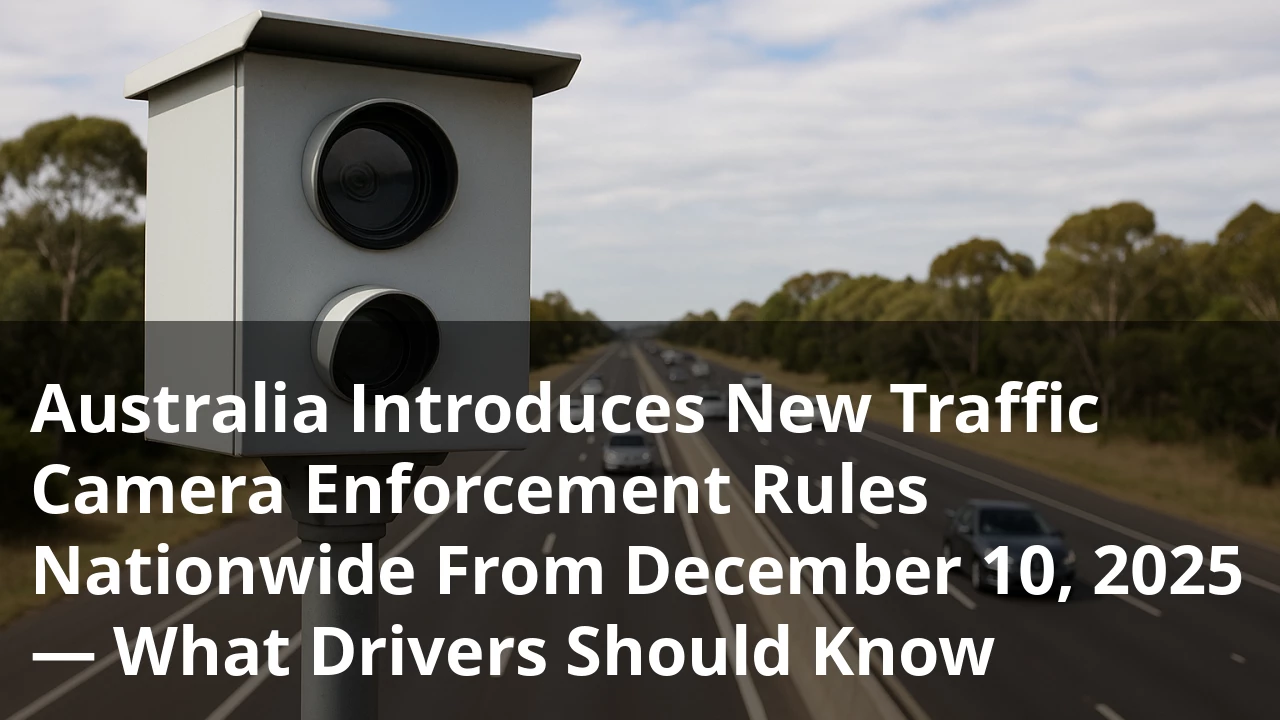
Australia is about to implement a sweeping change to how road rules are enforced — a nationwide update to traffic camera enforcement is scheduled to begin on December 10, 2025. Under the new system, compliance will be stricter, fines may increase, and a wider range of traffic violations will be monitored automatically. The reform is part of a larger effort to improve road safety, reduce accidents, and ensure consistency across states and territories. As this change approaches, it’s important for drivers to understand how enforcement will shift, what new regulations will apply, and how to avoid unexpected fines.
Why the Nationwide Enforcement Update?
In recent years, road authorities across Australia have grown increasingly concerned about road safety. Despite traditional policing and speed cameras, many common causes of accidents — such as mobile phone use while driving, seatbelt non-compliance, distracted driving, and minor speeding — have remained difficult to enforce consistently.
Meanwhile, differences in enforcement laws and practices between states have caused confusion: what triggers a fine in one jurisdiction may be ignored in another. A nationwide update aims to harmonize enforcement, reduce inconsistencies and make road rules more uniformly enforced regardless of where drivers are on the road.
The proposed update reflects recommendations by national road safety bodies and is supported by data showing that comprehensive camera enforcement is more effective at discouraging risky driving behaviour. The intended result is fewer accidents, safer roads for all road users, and a streamlined enforcement process that relies less on manual policing.
What’s Changing: Expanded Camera Coverage and New Offence Types
Broader Offence Detection
Under the new enforcement rules, traffic cameras will monitor and detect a wider array of offences than before. In addition to traditional speed and red-light violations, cameras will now be configured to automatically detect:
- Use of mobile phones while driving (hand-held or visible use)
- Seatbelt non-compliance (drivers and all passengers)
- Distracted driving behaviors such as not paying attention to the road
- Minor speeding offences (slightly above limit) and repeated offences
- Other risky behaviours — including some forms of dangerous driving in zones where cameras are active
The expanded scope means that offences which were once difficult or impractical to police consistently — like phone use at stoplights or improperly worn seatbelts — will now carry the same risk of detection as speeding.
Uniform Enforcement Across States and Territories
One of the core elements of the 2025 update is harmonization. All states and territories will adopt the new enforcement rules, which means:
- Camera signage and warnings will follow consistent national guidelines.
- Penalties and demerit-point allocation for offences will be standardized (though monetary fines may still vary by jurisdiction).
- Shared data systems will help enforcement authorities track repeat offenders across borders, reducing the loopholes for drivers who cross state lines.
More Automated and Smart Enforcement Infrastructure
The camera network is being upgraded with more advanced hardware and software — high-resolution cameras, night-vision capability, and automated image analysis. The new enforcement system uses technologies designed to detect subtle offences even in challenging conditions such as poor weather or low light.
Mobile enforcement units (e.g., mounted on trailers or vans) will also be expanded, meaning enforcement will not be limited to fixed camera spots. This conveys a clear message: anywhere is potentially a monitored area.
Penalties, Fines, and Demerit Points Under the New Rules
With the expansion of offence types and enforcement reach, expected penalties are stronger. Here is how the new system is likely to handle offences under the national framework:
- Use of mobile phones while driving: Heavy fines and loss of demerit points, even for first offences captured by camera.
- Seatbelt offences: Fines and demerit points applied whether offence involves a driver or passenger.
- Speeding — including minor excesses above the limit: Tighter detection thresholds, so driving even slightly above posted limits can result in a fine. Repeat offences may lead to steeper penalties or license suspension depending on jurisdiction.
- Dangerous or distracted driving caught on camera: High-range penalties, possible license suspension, and, for repeat offenders, increased insurance or legal consequences.
Because the system is nationwide, demerit points and offence records will be more easily shared across states. Drivers with cross-jurisdiction travel — or those moving to a different state — should expect prior infractions to carry over.
What Drivers Should Do to Prepare
With the new enforcement coming soon, taking a few simple steps could save drivers from unwelcome surprises:
- Review and update your driving habits: Store phones out of sight when driving, ensure everyone in the vehicle is correctly buckled, and avoid even minor speeding.
- Plan routes carefully: Be especially cautious in urban zones, near schools, pedestrian areas, roadworks or anywhere signage suggests camera enforcement.
- Check state-by-state signage and rules: While enforcement is national, local laws may still vary slightly (e.g. fine amounts). Familiarize yourself with regulations in your area or any state you might travel to.
- Update license and registration details to ensure that any notices or penalty notices are properly received.
- Drive defensively and avoid distractions — consider using “do not disturb” modes, hands-free audio, and treat every traffic sign as potentially under camera surveillance.
What This Means for Road Safety and Policy
The December 2025 enforcement update reflects a larger shift in road safety strategy. Rather than relying solely on policing, the government and transport agencies are embracing technology to promote compliance and reduce road trauma.
Expected long-term benefits include:
- Reduced rates of accidents caused by distracted driving or seatbelt non-compliance
- Lower incidence of speed-related crashes — including minor overspeeds that cumulatively contribute to many road injuries
- More uniform enforcement across Australia, making travel between states safer and more predictable
- Better deterrence of repeat offenders, improving overall behaviour on roads
From a policy standpoint, this also represents a move towards smarter enforcement: automated, data-driven, and less dependent on active policing resources.
Common Concerns and Challenges
While many support the increased enforcement, some concerns have been raised:
- Privacy and surveillance: Increased camera coverage and data sharing raises questions among privacy advocates and civil liberty groups.
- Fairness for inadvertent offences: Drivers accustomed to minor speeding or brief stops with phone use may find harsh penalties if cameras catch offences previously overlooked.
- Impact on low-income or casual drivers: Fines and demerit points could disproportionately affect drivers with fewer resources or those unlikely to absorb repeated penalties easily.
- Implementation fairness — technical errors or camera misreads: As with any automated system, there is a risk of errors or misclassification. Clear appeals processes will be needed.
Transport authorities have signaled willingness to review appeals and ensure that enforcement is reasonable, but drivers should remain alert and informed.
What to Watch After December 10, 2025
Once the enforcement update goes live, drivers should monitor a few key developments:
- Public feedback and reports of camera errors or misclassification — these will shape future calibration and procedural tweaks.
- Data on accident and crash rates — the success of the reform will ultimately depend on measurable improvements in road safety.
- Government communication about enforcement zones, signage, and outreach campaigns to educate drivers about the new rules.
- Potential adjustments in fine levels or demerit thresholds, especially if monitoring reveals patterns of unfair catch scenarios.
The nationwide rollout of new traffic camera enforcement rules on December 10, 2025 marks a major shift in how Australia handles road safety. With expanded offence detection, more cameras, stricter fines, and harmonized rules across jurisdictions, drivers face a significantly stricter environment.
While tougher enforcement may feel daunting at first — especially for those used to casually stretching limits — the focus is on safer roads, fewer accidents and more predictable compliance. For drivers, the message is simple: assume that any stretch of road may be monitored. Driving carefully, avoiding distractions, respecting speed limits and ensuring passengers are buckled is no longer just best practice — it’s the new expectation nationwide.











Leave a Comment